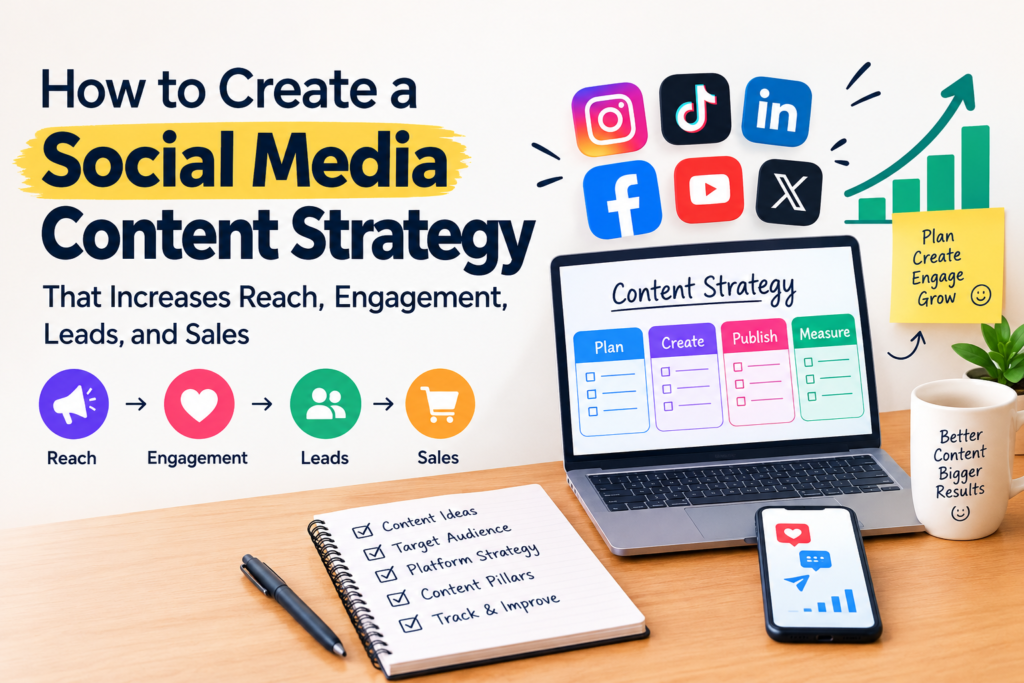
Social media content strategy is the process of planning, creating, publishing, and measuring content to achieve specific business goals. A successful strategy does more than increase followers or generate likes. It helps the right people discover your brand, interact with your content, become leads, and eventually purchase your products or services.
Many businesses post Reels, images, promotional offers, and educational content regularly but still struggle to generate customers. The problem is often not a lack of content. It is the absence of a clear connection between what the business publishes and what its audience needs at each stage of the buying journey.
According to Sprout Social’s 2026 Social Media Content Strategy Report, consumer expectations differ across platforms, making audience research and platform-specific content important parts of planning. The practical approach is to establish measurable goals, understand customer problems, create useful content, provide clear next steps, and track whether social activity contributes to business results.
1. Set Clear Goals Before Creating Content
The first step in building a social media marketing strategy is deciding what the content needs to accomplish. Without defined goals, it becomes difficult to know whether a post was successful or what should be improved.
Choose goals that connect directly to business outcomes:
- Reach: Introduce your brand to relevant people who do not already follow you.
- Engagement: Encourage meaningful comments, shares, saves, replies, and conversations.
- Lead generation: Collect qualified inquiries, email sign-ups, consultation requests, or direct messages.
- Sales: Generate purchases, bookings, subscriptions, or service inquiries that convert into revenue.
Avoid trying to maximize every metric with every post. A tutorial may be designed to earn saves, while a product demonstration may aim to generate website visits and purchases.
Make each goal measurable and time-bound. For example, a business could aim to increase qualified website visits from Instagram over the next 90 days, using its current performance as the baseline. The target should be based on the business’s actual results and resources, rather than an arbitrary industry-wide number.
HubSpot Academy’s social media strategy lesson explains how to select platforms, establish key performance indicators, and connect social media activity with broader marketing objectives.
2. Understand Your Target Audience and Their Problems
Content performs a business function when it addresses a need that matters to the intended audience. Before choosing topics, identify who your customers are, what they want, and what prevents them from taking action.
Start by answering four questions:
- Who is most likely to buy your product or service?
- What problem are they trying to solve?
- What questions do they ask before making a purchase?
- What concerns might stop them from trusting your business?
Use customer messages, sales conversations, comments, reviews, frequently asked questions, and website search data to find answers. Social media analytics can also reveal which topics attract your current audience and which posts reach people outside your follower base. If you notice that your Instagram account is getting views but not gaining followers, review the content topics, audience interests, and engagement patterns to understand what may be missing.
For example, a custom water bottle business might discover that customers are concerned about minimum order quantities, design options, leak resistance, and delivery times. Those concerns provide practical content ideas: a product demonstration, a customization tutorial, a bulk-order guide, and an explanation of the ordering process.
Do not assume that your existing followers represent every potential customer. If your content receives views but attracts people who are unlikely to purchase, revisit your topics, messaging, and audience targeting.
3. Choose Social Media Platforms Based on Your Business Goals
You do not need to publish on every social media platform. Select the channels where your target audience spends time and where your business can create content suited to their behavior.

Useful for visual product demonstrations, Reels, customer testimonials, creator collaborations, Stories, and direct-message inquiries. Businesses selling visually appealing products can use it to demonstrate value and build trust.
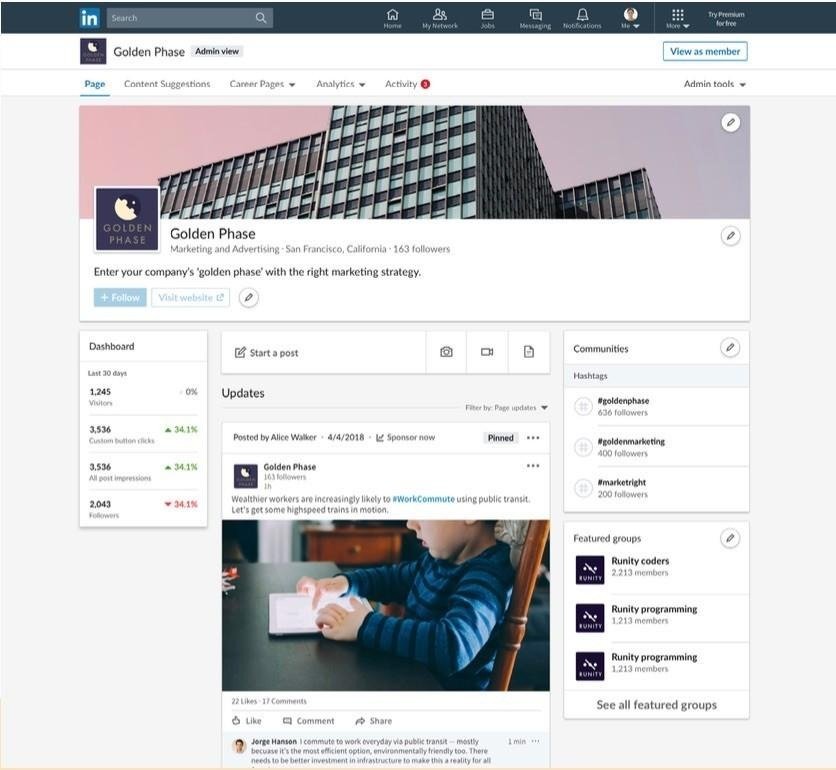
Suitable for B2B marketing, professional expertise, industry analysis, case studies, and reaching business decision-makers.

TikTok
Can support product discovery, demonstrations, tutorials, and personality-driven short videos when your intended audience uses the platform.
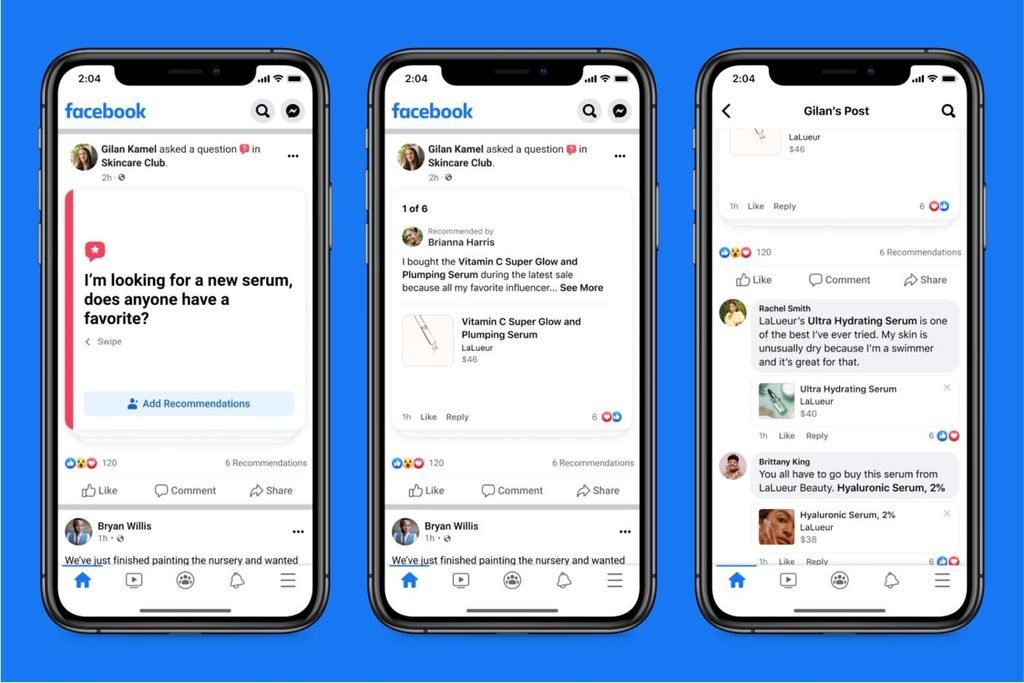
Can support local business visibility, community discussions, customer communication, events, and advertising.
These are starting points, not fixed rules. Review each platform’s analytics and your actual customer behavior before investing significant time in a channel.
Adapt content to the platform rather than copying the same post everywhere without changes. The central message may remain consistent, but the video format, caption, creative, and call to action should suit the audience and platform.
4. Build Content Pillars That Support the Customer Journey
Content pillars are recurring themes that make your publishing plan more focused. They help prevent a feed from becoming a constant stream of advertisements or disconnected trends.
A practical social media content plan can include five pillars:
| Content pillar | Purpose | Example |
| Educational | Solve customer problems | A tutorial explaining how to use a product |
| Problem-solving | Address objections and frustrations | A post comparing common solutions |
| Trust-building | Reduce purchase uncertainty | Customer reviews or a real case study |
| Product or service | Explain your offer | A demonstration showing important features |
| Conversion-focused | Encourage a specific action | A consultation invitation or product offer |
The right balance depends on your business, audience, and goals. There is no universally correct percentage that every brand should follow.
A useful test is to ask whether your content helps people understand a problem, evaluate a solution, trust your business, or take a relevant next step. If a post does none of these things, reconsider why it belongs in the plan.
Original content matters as well. Meta’s guidance on helping creators find new audiences describes Instagram’s efforts to give eligible original content opportunities to reach audiences beyond existing followers. The specific distribution of any individual post is not guaranteed, but creating material with your own demonstrations, expertise, or perspective gives people a reason to engage with your brand rather than a generic repost.
5. Create Content That Earns Reach and Engagement
Reach introduces your content to people; engagement shows how they respond to it. Neither metric alone proves that a post generates leads or sales, so content should be designed with a clear purpose.
Start with a specific customer question
Use the problems identified during audience research to develop practical posts. Instead of publishing a generic message such as “Our products are high quality,” demonstrate what quality means, explain how to assess it, or show the product being used.
Make the opening clear
For a short video, quickly establish the problem or benefit. For a carousel, make the first slide specific enough to communicate why someone should continue reading. Avoid misleading hooks that promise information the post never delivers.
Use suitable formats
- Reels and short videos: Demonstrations, quick tutorials, comparisons, and behind-the-scenes footage.
- Carousels: Step-by-step guides, checklists, and explanations of complex topics.
- Stories: Polls, question prompts, updates, and conversational interactions.
- Text posts: Opinions supported by experience, detailed explanations, and professional insights.
- Customer stories: Genuine feedback, use cases, and documented results shared with appropriate permission.
Encourage meaningful interactions instead of asking for engagement without a reason. A question such as “Which of these two product designs would work better for your team?” gives people a concrete reason to respond.
Also, review why your Instagram account may get views without gaining followers. A post can attract attention without giving viewers a clear reason to follow your account. Make your profile, recurring topics, and content promise clear so new visitors understand what they will receive by staying connected.
6. Turn Engagement Into Qualified Leads
Likes and comments can indicate interest, but leads require a defined next step. Your social media lead generation strategy should make it easy for interested people to move from content to a useful business conversation.
Choose a conversion path that fits your offer:
- A service business can invite people to book a consultation.
- An online store can direct interested viewers to a relevant product page.
- A B2B company can offer a useful guide or request a demo.
- A local business can invite customers to message for availability or pricing.
Make the call to action specific. “Learn more” may be appropriate in some contexts, but “View the available designs,” “Request a bulk-order quote,” or “Book a 15-minute consultation” explains what happens next.
The landing page must match the promise made in the post. If a video promotes a particular product, link directly to that product rather than sending everyone to a generic homepage. Keep the page mobile-friendly, explain pricing or next steps clearly, and avoid asking for unnecessary information on a lead form.
Track the source of inquiries with campaign-specific UTM parameters where appropriate. Google provides instructions in its Campaign URL Builder documentation for adding campaign parameters that help distinguish traffic sources in Google Analytics.
7. Develop a Content Calendar You Can Maintain
A social media content calendar turns your strategy into a repeatable publishing process. It should identify the content topic, target audience, platform, format, objective, publication date, and call to action.
Start with a manageable schedule that fits your production capacity. For example, a small business might publish three main posts per week, use Stories for timely updates, and spend time responding to comments and messages. This is an illustrative starting point, not a guaranteed optimal frequency.
Plan content in batches:
- Collect customer questions and choose the week’s topics.
- Write scripts, captions, and calls to action.
- Record videos and create visual assets.
- Schedule finished content where practical.
- Review comments, messages, and performance after publication.
Leave space for timely announcements and relevant conversations. A calendar should create consistency without forcing your business to publish irrelevant content just to fill a slot.
8. Measure Performance and Improve the Strategy
A social media content strategy needs regular review. Use native platform insights, website analytics, and lead or sales records to understand what is working.
Track metrics according to the objective.
| Goal | Useful metrics |
| Reach | Reach, impressions, non-follower reach |
| Engagement | Shares, saves, comments, meaningful replies |
| Traffic | Link clicks, landing-page sessions, engaged sessions |
| Leads | Qualified inquiries, form submissions, booked calls |
| Sales | Purchases, conversion rate, revenue attributed to campaigns |
Do not treat every metric as interchangeable. A post with fewer views may generate more qualified leads than a widely shared entertainment post. Similarly, link clicks do not prove that visitors read the page or completed a purchase.
Use Meta Business Suite to review available Facebook and Instagram content insights, and use Google Analytics to assess relevant website behavior. For sales, compare analytics with your order system or customer relationship management records, recognizing that attribution can be incomplete when people discover a brand on one device and buy later on another.
Review performance weekly for operational issues and monthly for broader patterns. Compare similar formats and objectives, identify which topics attract qualified prospects, and test one meaningful change at a time. If a post has high reach but few profile visits, improve its relevance and next step. If it generates clicks but few leads, examine the landing page and offer. If it produces leads but few purchases, investigate lead quality, pricing, trust, and the sales process.
9. Build a Strategy Around Learning, Not Just Posting
A social media content strategy is not a document you create once and follow forever. Audience interests, platform features, products, and business priorities change. Your plan should evolve as evidence accumulates.
A practical monthly review should answer five questions:
- Which content attracted the most relevant new people?
- Which posts generated meaningful conversations or saves?
- Which posts brought qualified website traffic or leads?
- Which campaigns contributed to actual sales?
- What should we stop, improve, or test next month?
Use those answers to refine your content pillars, platform choices, creative formats, and calls to action. Do not copy a competitor’s viral post simply because it received attention; consider whether its audience, objective, and offer are relevant to your own business.
Conclusion
Creating a social media content strategy that increases reach, engagement, leads, and sales requires more than posting frequently. Start with measurable business goals, research real customer problems, choose appropriate platforms, develop useful content pillars, and connect every conversion-focused post to a clear next step.
Then measure the full journey—from discovery and engagement to website activity, qualified inquiries, and purchases. This makes it possible to distinguish content that merely attracts attention from content that contributes to business growth. Consistent testing and informed adjustments will give your strategy a stronger foundation than chasing trends or relying on follower counts alone.
How often should a business post on social media to increase reach?
There is no posting frequency that works for every business. Start with a schedule you can maintain while producing useful content and responding to customers. Review reach, engagement, and conversions over several weeks, then adjust based on your audience’s response and your team’s capacity.
What type of social media content generates the most engagement?
The best format depends on the audience and platform. Tutorials, practical tips, relatable problem-solving posts, customer stories, demonstrations, and thoughtful questions can all encourage engagement when they address a real need. Test different formats and compare results using relevant metrics such as shares, saves, comments, and replies.
How can I turn social media followers into paying customers?
Give followers a clear path to purchase. Demonstrate the value of your offer, answer common objections, share genuine customer evidence, and direct interested people to a relevant product page, booking form, or consultation. Track leads and purchases rather than assuming that follower growth automatically produces revenue.
Why is my social media reach increasing but my engagement staying low?
Your content may be reaching people who are not interested in the topic, or it may not provide a compelling reason to respond. Review which audiences see the posts, whether the content matches their needs, and whether the opening communicates a clear benefit. Compare engagement across similar posts instead of judging the strategy from one publication.
How do I measure whether my social media content strategy is generating sales?
Track the journey from social post to website visit, lead, and purchase. Use platform insights for reach and engagement, campaign tracking parameters for website traffic, and order or CRM records for business outcomes. Attribution is not always complete, so interpret tracked conversions alongside customer feedback and other available evidence.
How long does it take for a social media content strategy to produce results?
The timeline varies with audience size, platform, offer, content quality, budget, and sales process. Some campaigns can generate inquiries quickly, while building consistent organic reach and customer trust may take longer. Establish a baseline, review early engagement and traffic signals, and evaluate lead and sales trends over a defined testing period rather than expecting every post to produce immediate revenue.
Let’s Talk About Your Business
Not sure which approach is right for your business? Get a free consultation with our team.